Morning arrived the way it always should — without an alarm clock.
No notifications. No emails. No fluorescent office lights humming like angry insects working themselves up to a full swarm. Just the soft hiss of the Willamette slipping past camp while the first light filtered through the cottonwoods. The river had traded yesterday’s gold for polished glass — calm enough to convince you the whole world had finally decided to behave itself.
That illusion lasted about ten minutes.
First order of business was coffee.
Not the polished café variety with whipped foam and names longer than a Norse saga. This was black campfire coffee — strong enough to dissolve regret, thick enough to stand a spoon upright. The kind of brew that doesn’t ask how you’re feeling. It just grabs you by the collar and reminds you you’re still alive, whether you were fully convinced of that fact this morning or not.
Breakfast disappeared fast.
A night’s sleep, a little THC, a sky full of stars, and the steady heartbeat of the river had done something worth noting.
The weight was still there.
It just wasn’t crushing me anymore.


Breaking camp has always fascinated me.
One minute there’s a tiny civilization — boats, tents, coffee cups, cameras scattered across a picnic table like surgical instruments waiting for the next operation.
Twenty minutes later, nothing. Just another empty patch of Oregon waiting for the next wanderer to show up and pretend they discovered it.
Maybe that’s why I love camping. It reminds you how temporary we actually are.
Leave no trace isn’t just good outdoor ethics.
It’s philosophy, if you let it be.
The boats slipped back into the water. Destination: Albany. The river would decide how we got there, same as it decides everything else out here.
There were long stretches where the Willamette turned almost hypnotic — drifting without paddling, letting the current do all the work while the camera never strayed far from my lap.
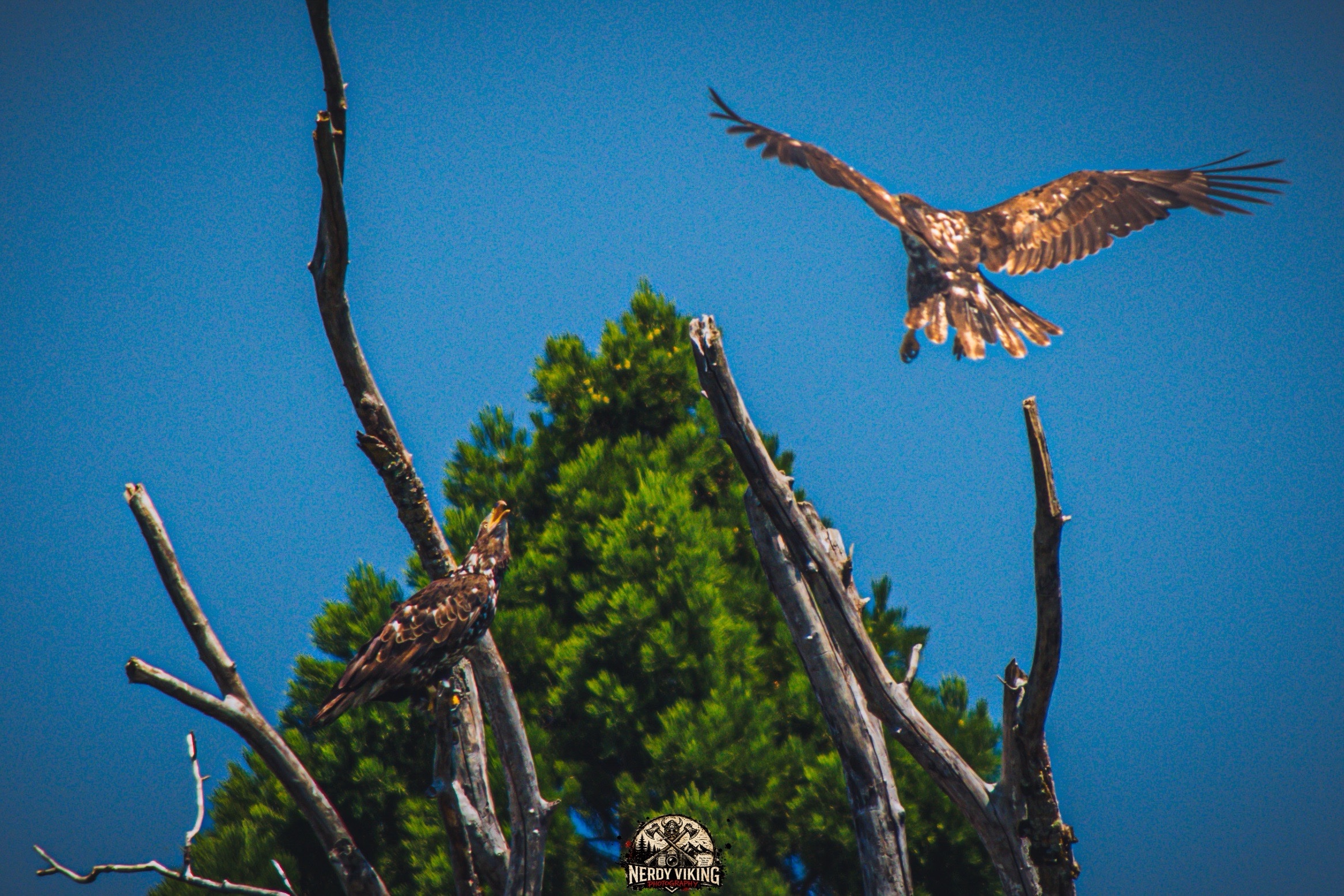
The wildlife hadn’t taken the day off. The bald eagles were back on patrol, perched high above like feathered gods supervising their kingdom. Every now and then one would launch, six feet of wings slicing through the morning air with the confidence of something that has never once questioned its place in the order of things.
Further downstream, another heron stood frozen on a pile of ancient driftwood.
I’ve become convinced herons aren’t birds at all. They’re old river spirits that occasionally remember to flap their wings, mostly out of professional obligation.
Photography became less about chasing images and more about just paying attention. Morning light danced across the water, turning every ripple into liquid mercury. Gravel bars appeared around lazy bends, looking like forgotten islands where a man could disappear for a weekend and nobody would think to come looking.
Every now and then Robert or I pointed at another stretch of shoreline.
“That’d make a good camp.”
“Imagine coming back here in the fall.”
“What about over there?”
The river revealed its secrets slowly — not the obvious ones marked on maps, but the hidden beaches and quiet pockets that only show themselves to people willing to arrive at three miles an hour instead of seventy.
Those are the places worth remembering.
Of course, no river worth respecting stays polite forever.
The calm water eventually surrendered to faster current. The surface twisted. The river narrowed. Suddenly we weren’t floating anymore.
We were working.
Paddles dug hard as standing waves slapped the boats. Nothing life-threatening, but enough to wake every nerve ending that had been comfortably napping since breakfast. Cold spray hit my face. The raft bounced.
For a few glorious minutes there wasn’t room in my brain for grief or work or politics or deadlines or broken friendships.
Just: don’t screw this up.
Sometimes excitement is the best therapist money can’t buy, and it doesn’t ask you a single question the whole session.
By afternoon we drifted into the outskirts of civilization again. The sounds returned first — cars, airplanes, the distant bark of dogs. Humanity announcing itself long before you actually see it, the way it always does.
Funny how quickly you get used to silence.
Funnier still how loud the modern world sounds once you’ve escaped it for even a single night.
Five hours after leaving camp, Albany finally greeted us. The boats slid onto shore with the quiet scrape of rubber on gravel.
Just like that, the expedition was over.
Driving home felt strange.
Twenty-four hours earlier I’d climbed into a raft carrying more emotional baggage than camping gear. Now I was carrying photographs. Stories. Birds. Quiet mornings. Campfire coffee. A little sunburn. A few sore muscles.
And something I hadn’t been able to find for weeks.
Perspective.
People spend thousands of dollars chasing peace. Luxury resorts. Cruises. Retreats promising enlightenment for the low price of your mortgage payment.
Sometimes peace costs less than a raft, a sleeping bag, a camera, a handful of gummies, and one good friend willing to drift downstream without demanding conversation you’re not ready to have.
The Willamette asked nothing from me except that I surrender to its current. It never promised answers. It just gave me enough silence to finally hear my own.
And somewhere between Peoria and Albany — eagles circling overhead, coffee staining an old enamel mug, Oregon unfolding one bend at a time — I realized something.
The river hadn’t changed me.
It had just reminded me of the man I was before life got this damn loud.
Willamette River, Day Two. Peoria to Albany, complete. Cargo: photographs, sunburn, sore muscles, something close to perspective. The river: asked nothing, gave enough. The weight: lighter, not gone.
Still here.
Still floating forward.


Leave a Reply