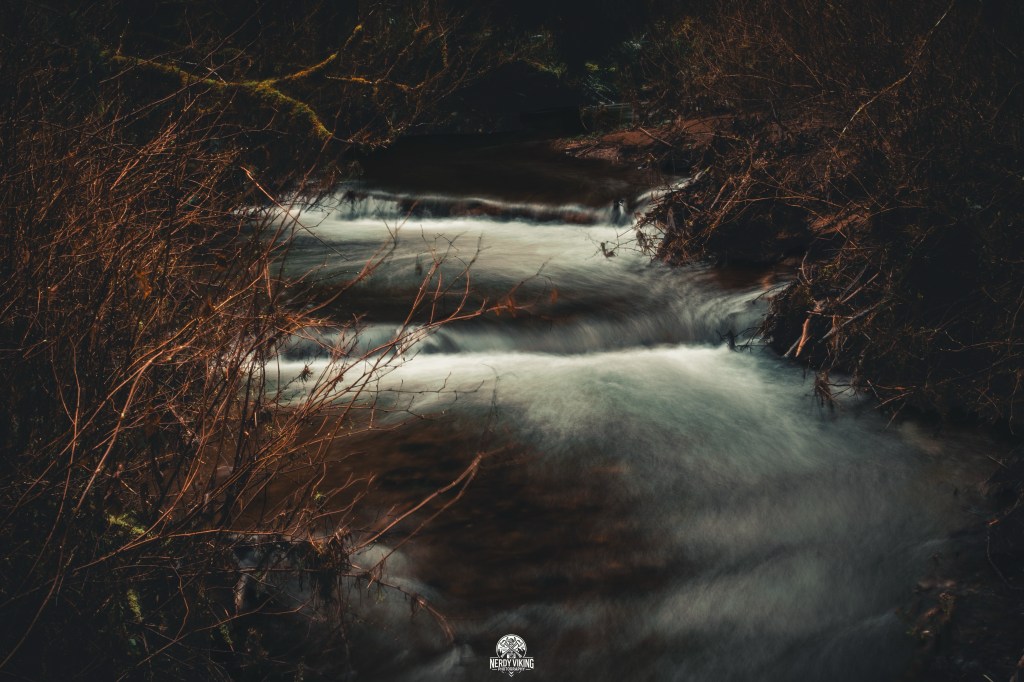
What is one word that describes you?
Being a Frank Assessment of the Engine Running Underneath All of This and Why It Has Never Once Pointed Toward the Sensible Option
If I had to reduce the entire strange operation of my existence down to a single word — the kind of word that could sit on the page like a warning label on a bottle of whiskey that the distiller himself seems slightly nervous about — it would require no deliberation whatsoever.
Curious.
Not the domesticated variety.
Not the polite academic curiosity they attempt to install in you during the formal educational process — the kind where you raise your hand at the appropriate moment and ask sensible questions that fall within the approved perimeter of the day’s curriculum and receive gold stars for demonstrating engagement with the material.
That kind of curiosity has been house-trained into something that barely qualifies as curiosity at all. It’s been fitted with a collar and a leash and taught to heel.
I am talking about the other kind.
The feral variety.
The dangerous strain that operates without a leash or a schedule or any meaningful respect for the concept of a reasonable destination. The kind that has been responsible for more questionable decisions per calendar year than any other single factor in my personal history and shows absolutely no signs of moderating its behavior based on past outcomes.
The kind that convinces a fully grown adult to step off a perfectly good trail because there might be something interesting over the ridge.
The kind that whispers go look at that in a tone that bypasses the rational mind entirely and speaks directly to whatever ancient pre-civilized apparatus is still running underneath the modern operating system.
The kind that has never once in its entire operational history asked whether the road was sensible before insisting you take it.
Curiosity is a strange and ungovernable engine.
It’s what gets a man vertical before sunrise on a cold morning when every biological signal in the body is filing formal objections — dragging him out into the dark to stand in a forest that was old when his grandparents were young, waiting for fog to move through the trees at the specific angle that makes the whole scene look like something that exists outside of ordinary time.
It’s what puts a person flat on their stomach in the mud for twenty minutes photographing a mushroom with the focused intensity of a scientist who believes he is documenting a species that will reshape our understanding of the biological kingdom.
It’s the thing that generates proposals like:
“Let’s drive six hours into the mountains and see what’s up there.”
“Let’s take that trail that looks like it hasn’t seen voluntary human traffic since approximately 1973.”
“Let’s find out what happens if we set up long exposure photography on a mountain summit at two in the morning with no functioning plan for what we’re doing.”
Curiosity does not submit these proposals with supporting documentation or a risk assessment or any acknowledgment that previous proposals of similar architecture have produced results that required explanation afterward.
It just wants to know what happens next.
It is constitutionally, fundamentally, aggressively uninterested in whether the road is sensible.
It only wants to know where the road goes.
Most people — and I mean this without judgment because the logic is genuinely sound — eventually arrive at routines.
Comfortable predictable loops of work and sleep and television and weekends that follow reliable scripts. The known quantity. The manageable radius. The life that stays inside its own borders and doesn’t generate surprises that require immediate improvisation.
There is nothing wrong with this.
It is stable and it is quiet and it is safe and those are not small things.
But curiosity is constitutionally allergic to quiet.
Quiet to curiosity is not rest — it’s a provocation. It reads silence as a question that hasn’t been asked yet. It reads the comfortable routine as a perimeter that exists specifically to be tested. It sits in the stability for approximately forty-eight hours before it starts tugging at your sleeve with the persistence of a dog that has identified the direction of something interesting and cannot understand why you’re still sitting down.
What’s out there past the treeline?
What happens if you take the road that doesn’t appear on the map?
What if the most interesting thing you’ve ever seen is waiting approximately forty-five minutes past the point where you would normally turn around?
These questions have no off switch.
They have dragged me across forests and high desert and ghost towns that time stopped maintaining and mountain ridges that the weather had opinions about and more muddy trails than any cost-benefit analysis would endorse.
They have produced decisions that required explanation to reasonable people who were not there.
They have also produced every single thing in my life worth keeping.
Here is what curiosity actually does to photography — what it does that the technical tutorials and the composition guides and the equipment reviews cannot manufacture regardless of their quality:
It turns the ordinary world into a crime scene.
And you’re the investigator.
Strange light detonating through a gap in the canopy at an angle that has no business being that beautiful. A frog conducting its private operations underneath a log as if the log is a studio apartment and you are a wildly unwelcome guest. A waterfall announcing itself from somewhere in the middle distance — not visible yet, just audible, just the sound of moving water promising something worth walking toward.
Curiosity doesn’t walk past these things.
It stops.
It crouches.
It asks what’s actually happening here and then refuses to leave until it has at least attempted an answer.
It gets the camera out not because the shot is guaranteed but because what if it is.
And before long — somewhere between the frog and the waterfall and the fog and the long exposure at two in the morning on the mountain summit — you realize that curiosity isn’t just the thing that got you out of bed.
It’s the whole navigation system.
A compass with one fundamental design principle built into its core:
It will not point toward comfortable.
It has never pointed toward comfortable.
It points toward the dirt road with no destination and the trail that hasn’t been walked. The ridge that might have something extraordinary on the other side and the forest that’s older than most human civilizations and the mushroom that deserves twenty minutes of your complete and undivided attention.
It points toward the question.
Always toward the question.
The answer is just an excuse to generate the next one.
Most compasses are designed to help you find your way back.
Mine has never been particularly interested in that function.
It points out.
It points forward.
It points toward the place where the map runs out and the trail gets narrow and the trees get old and something moves in the fog that you weren’t expecting and the camera comes up and the shutter fires and you still don’t know exactly what you were looking at but you know —
You know it was worth the drive.
It was always worth the drive.
Curious: the most dangerous word in the language. Also the most reliable engine. Also the only compass I’ve ever trusted. Carry at your own risk. Do not operate near sensible decisions or comfortable routines. Side effects include: muddy boots, missed sleep, inexplicable photographs of fungi, and the persistent inability to drive past an unmarked road without wondering where it goes.
No known cure. Wouldn’t take it if there was.


 Nerdy Viking Photography
Leave a comment