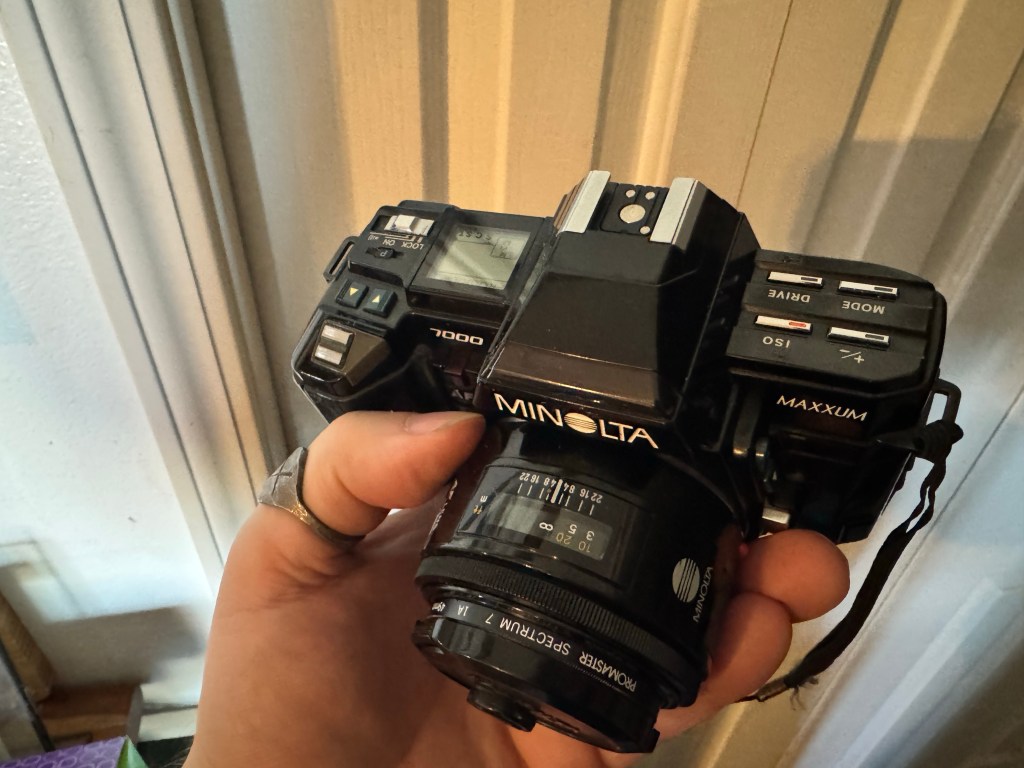
Rebecca hands me this black, angular relic — the Minolta Maxxum 7000 — and suddenly it’s 1985 again. Synth music in the background. Shoulder pads wide enough to land aircraft. The Cold War humming softly under fluorescent lights.
And in the middle of it all, this thing.
The Maxxum 7000 wasn’t just a camera. It was a declaration of war.
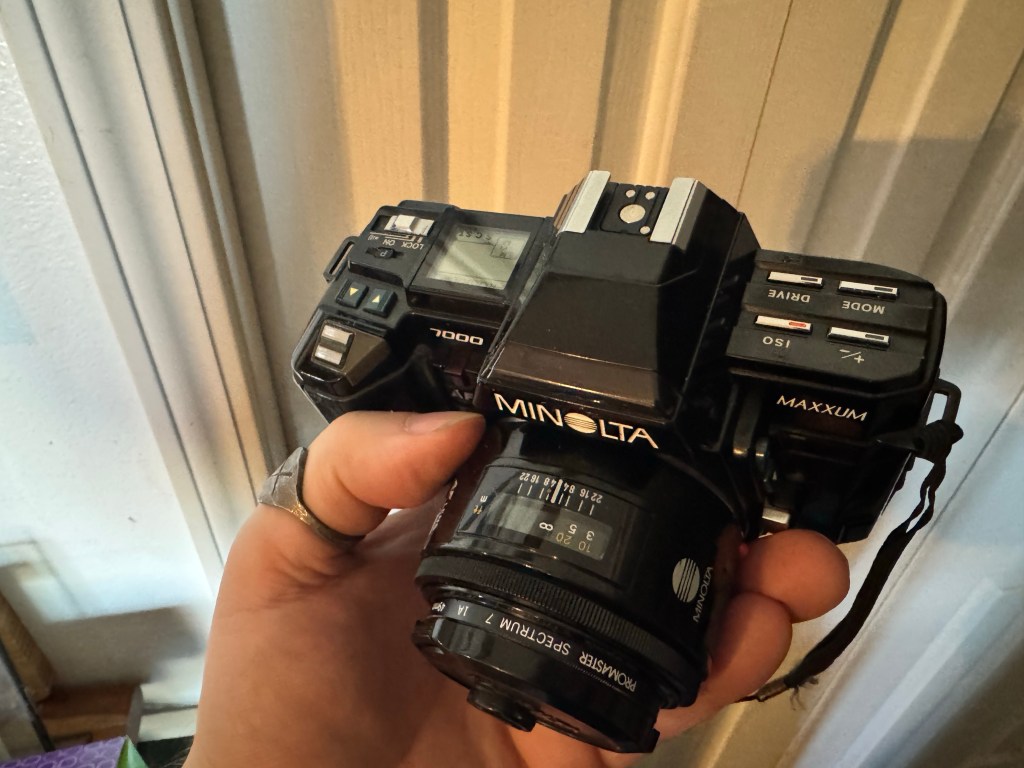
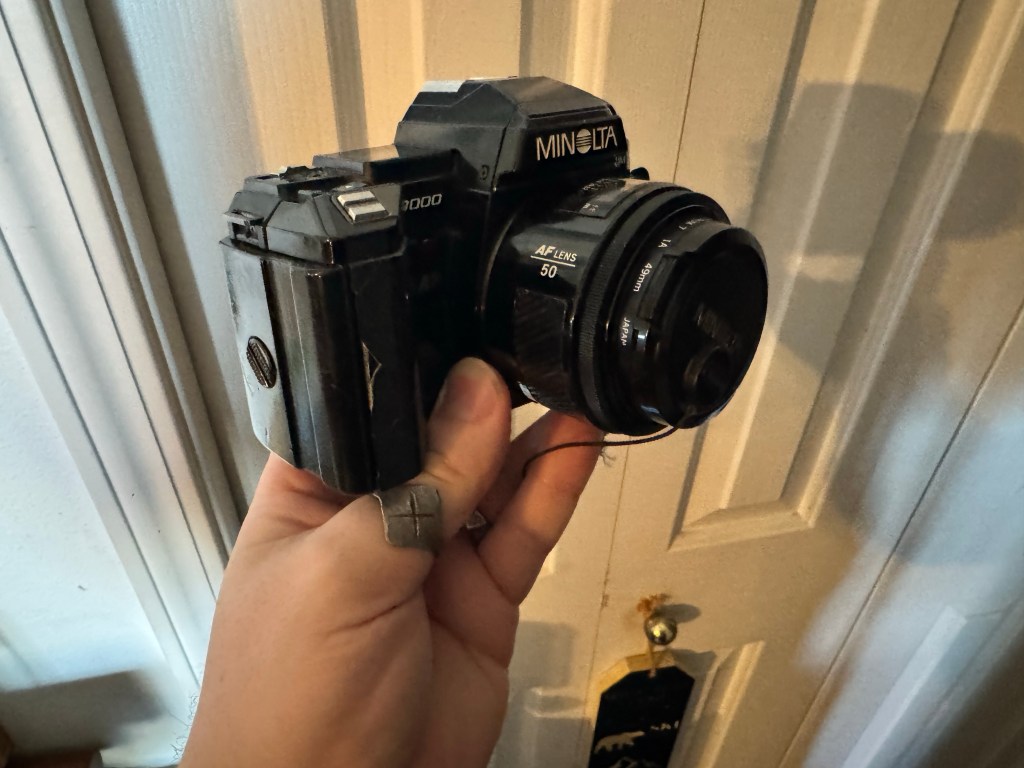
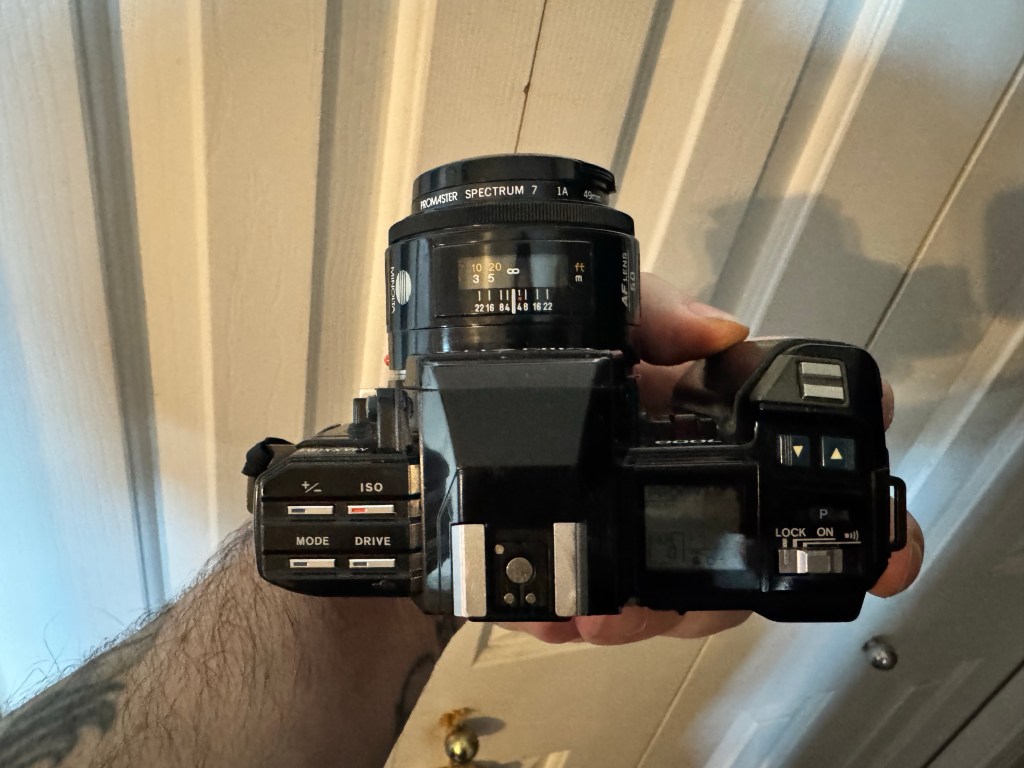
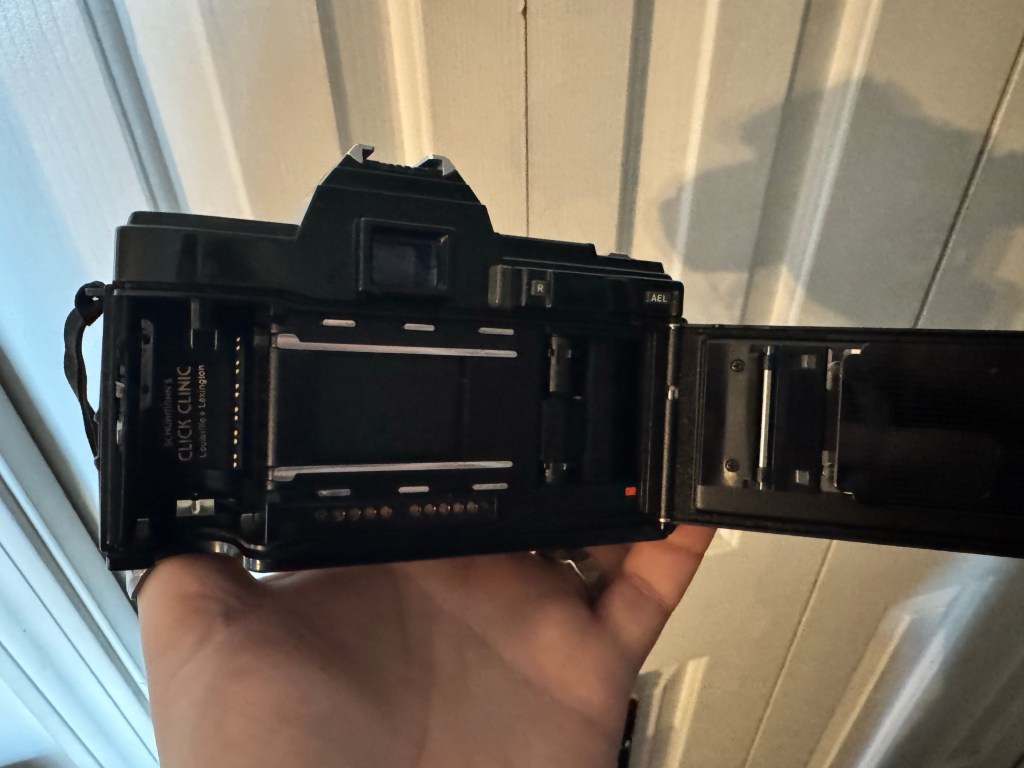
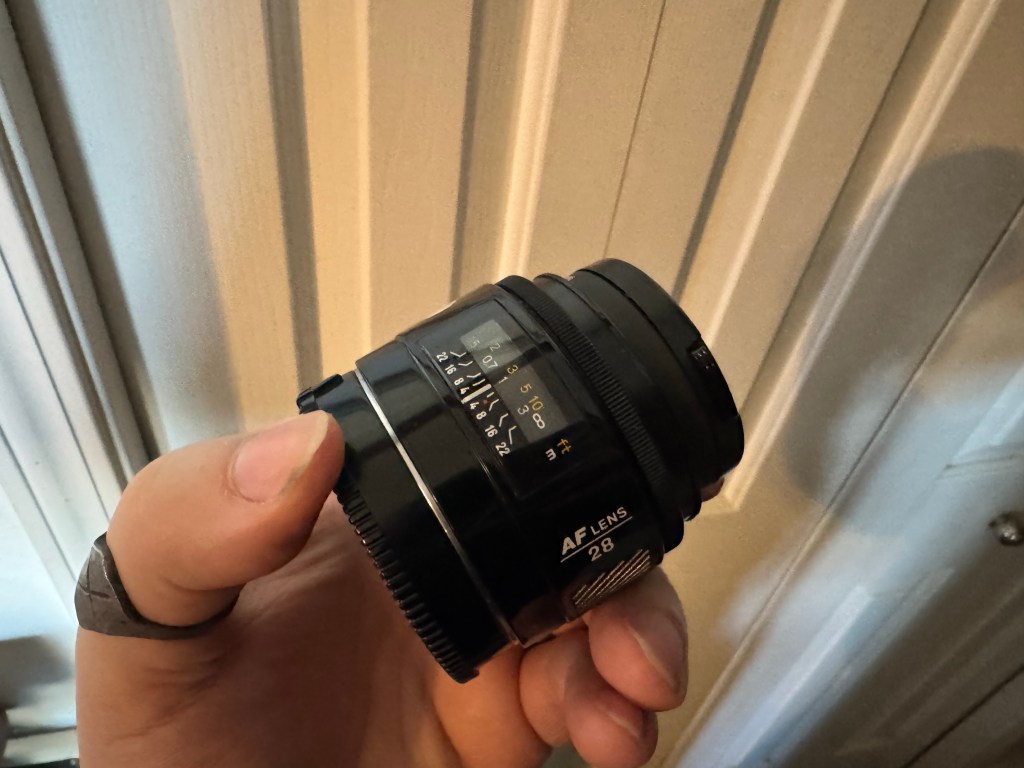
Before this beast showed up, autofocus was mostly a rumor. A science-fiction promise whispered in trade shows and engineering labs. Then Minolta — in a fit of pure Japanese audacity — dropped the first commercially successful autofocus SLR into the world and changed the entire game. 1985. The year photography blinked and went electric.
This wasn’t some clunky add-on lens motor experiment. The autofocus motor was in the body. Built-in. Integrated. Clean. It introduced the A-mount system — a mount so influential that Sony still uses its DNA decades later.
And it looked like the future at the time. Angular. Button-driven. LCD screen on top like a digital wristwatch grafted onto an SLR. It screamed, “The 80s have arrived and we are not asking permission.”
So I spent three hours cleaning it.
Three hours of cotton swabs, microfiber cloths, and the kind of obsessive focus normally reserved for bomb disposal. Forty years of dust and fingerprint history wiped away carefully, respectfully. Every dial turned. Every button tested. New batteries slid in like fresh life support.
Then — the moment.
Film loaded.
That mechanical whir. The unmistakable motorized advance — not the smooth quiet of modern digital shutters, but that robotic 80s whine that sounds like it’s preparing for liftoff.
And it works.
Everything works.
That’s the part that hits hardest. Forty years. Reagan was in office. Top Gun hadn’t even been released yet. And this thing still fires like it’s ready for another tour of duty.
Holding it feels different than holding digital. Heavier in consequence. You don’t spray and pray with film. You commit. Thirty-six frames. That’s your allotment. No chimping. No histogram safety net. Just light, chemistry, and your nerve.
The Maxxum 7000 wasn’t subtle about its ambition. It shoved the industry forward whether the purists liked it or not. Traditionalists sneered. “Autofocus? Lazy.” But the future doesn’t ask for approval. It just arrives.
And now here I am, decades later, loading it up like a mad archivist preparing for field experiments.
Rebecca found it. Gifted it. Which somehow makes it even better. Not just a camera — but a bridge. Between decades. Between film and digital. Between who I was and who I’m becoming.
There’s something rebellious about shooting with it now. In an era of mirrorless wizardry and AI-assisted everything, I’m walking around with a relic that once was the cutting edge.
It feels honest.
The Maxxum 7000 doesn’t do subtle firmware updates. It doesn’t connect to WiFi. It doesn’t care about Instagram algorithms. It does one thing: captures light onto film with a motor that once terrified competitors.
And that whir — that beautiful, unapologetic motorized whir — sounds like history reminding you that innovation was once loud and mechanical.
Forty years old.
Still alive.
Everything works.
That’s not just a camera.
That’s defiance in plastic form.


 Nerdy Viking Photography
Leave a comment