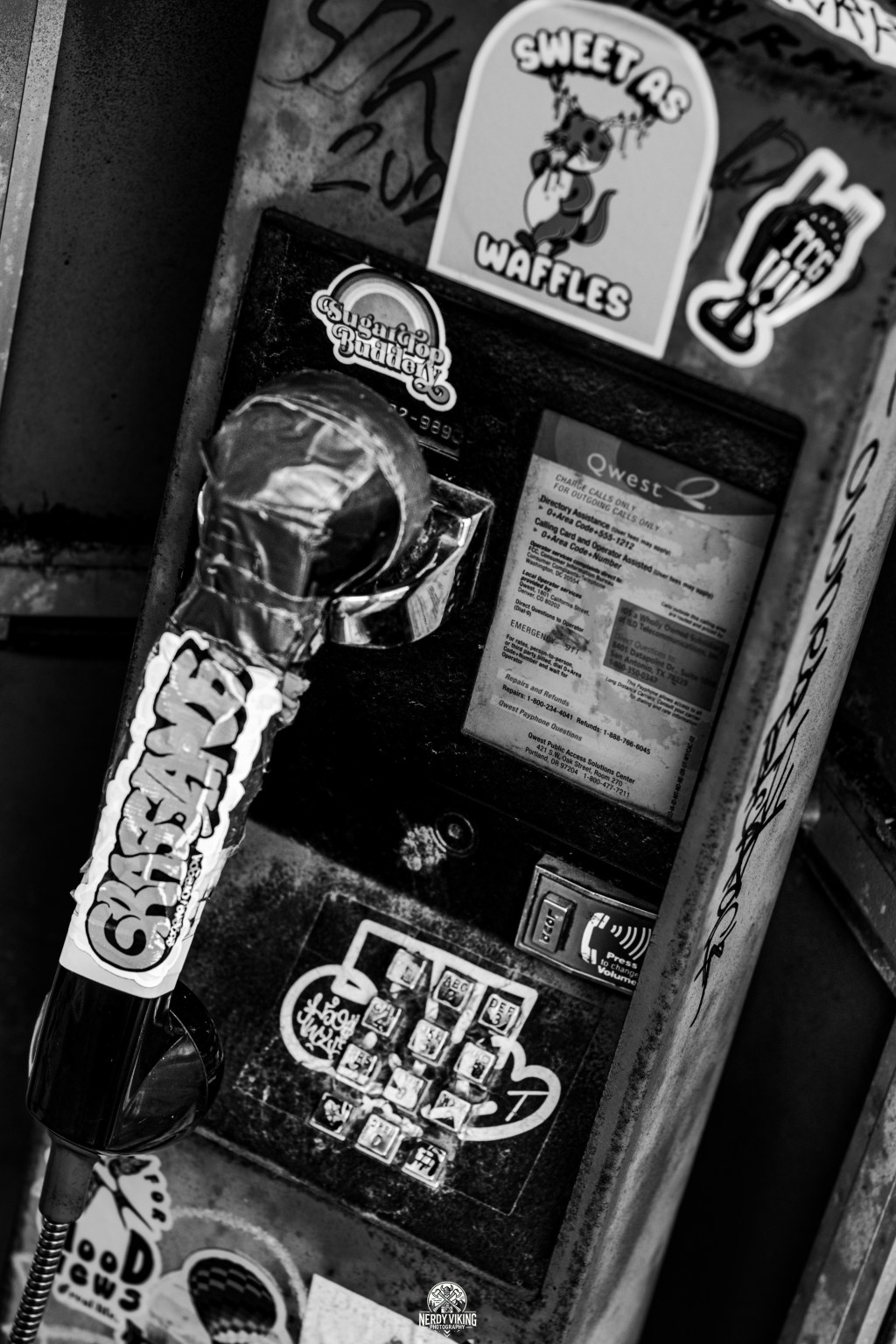
I found it standing there like a relic from a forgotten religion, half-swallowed by moss and damp Oregon air—a payphone, of all damn things, planted deep in the wilderness near Blue Pool. No road noise. No traffic. Just trees, water, and this rusted altar to a time when you had to stand still to be heard.
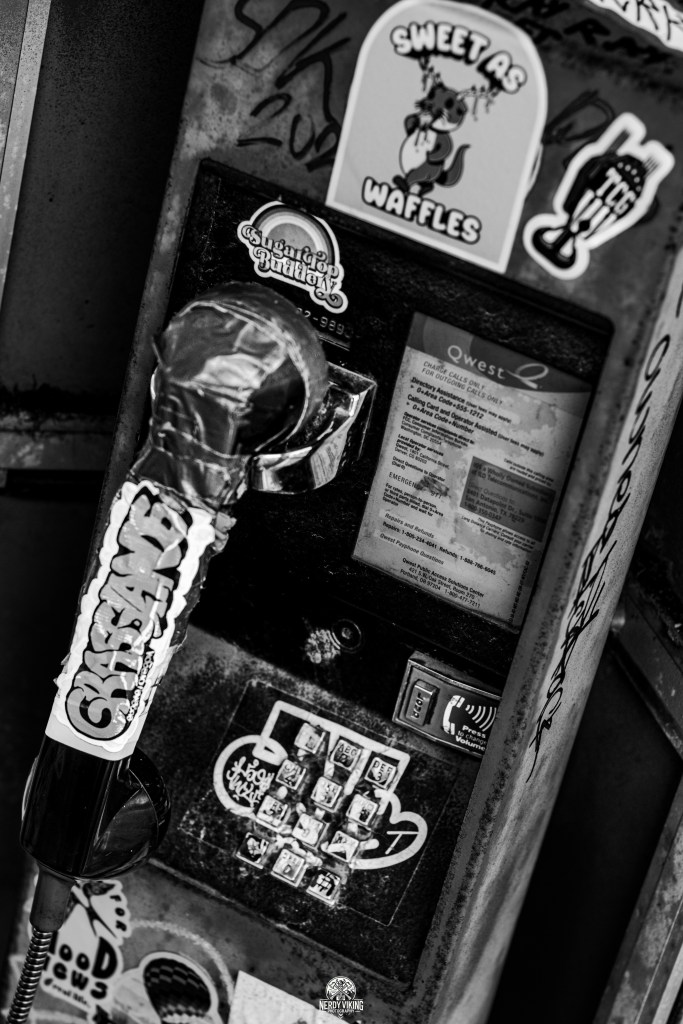
The thing was dead. Long gone. No dial tone, no lifeline back to civilization. But it still had its skin—layers of stickers, graffiti, sharpie hieroglyphs left behind by bored travelers, vandals, poets, and ghosts. Sweet waffles. Random symbols. Names that once mattered to someone, now just scratches in the metal. Nature was working it over slowly, patiently—moss creeping in like a repossession agent for the earth.
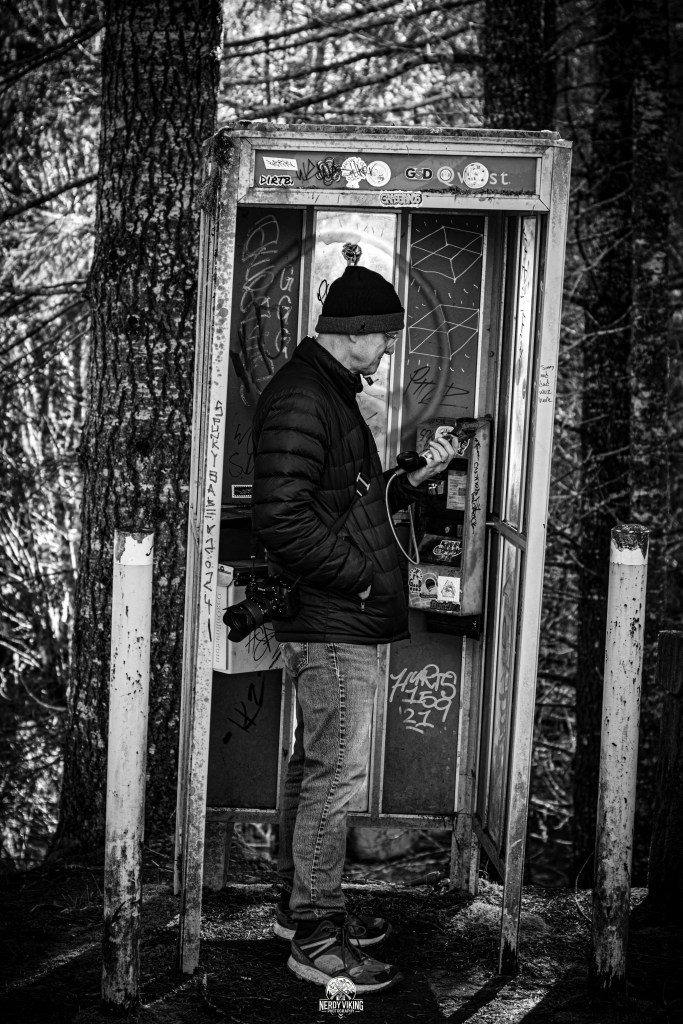
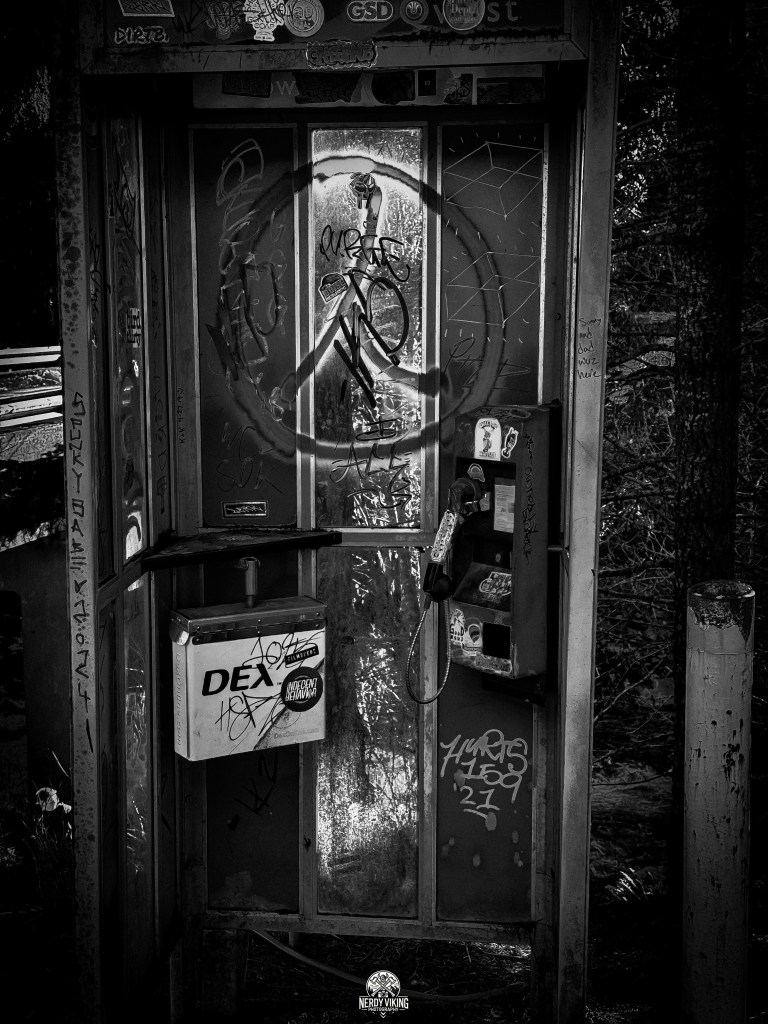
Robert stood inside the booth, holding the receiver like he expected someone to answer. Like maybe, just maybe, the forest might pick up on the other end and say something profound. Or cruel. Or nothing at all. The phone book was still there—pages curled and yellowed, clinging to relevance long after the world moved on. A directory of people who probably don’t live there anymore, if they’re alive at all.
That’s what got me. Not the irony. Not the decay. But the stubbornness of it. This machine once connected people in emergencies, late-night confessions, bad news, drunk apologies, and last chances. It was built to serve, abandoned when it no longer fit the speed of the world, then left to rot quietly among fir trees and volcanic rock.
Now it’s just another artifact—proof that even our most important inventions eventually get forgotten if they stop screaming for attention. The forest doesn’t care about progress. It doesn’t care about convenience. It absorbs everything equally.
The phone will never ring again. But it’s still here. Listening. And somehow, that feels right.


 Nerdy Viking Photography
Leave a comment