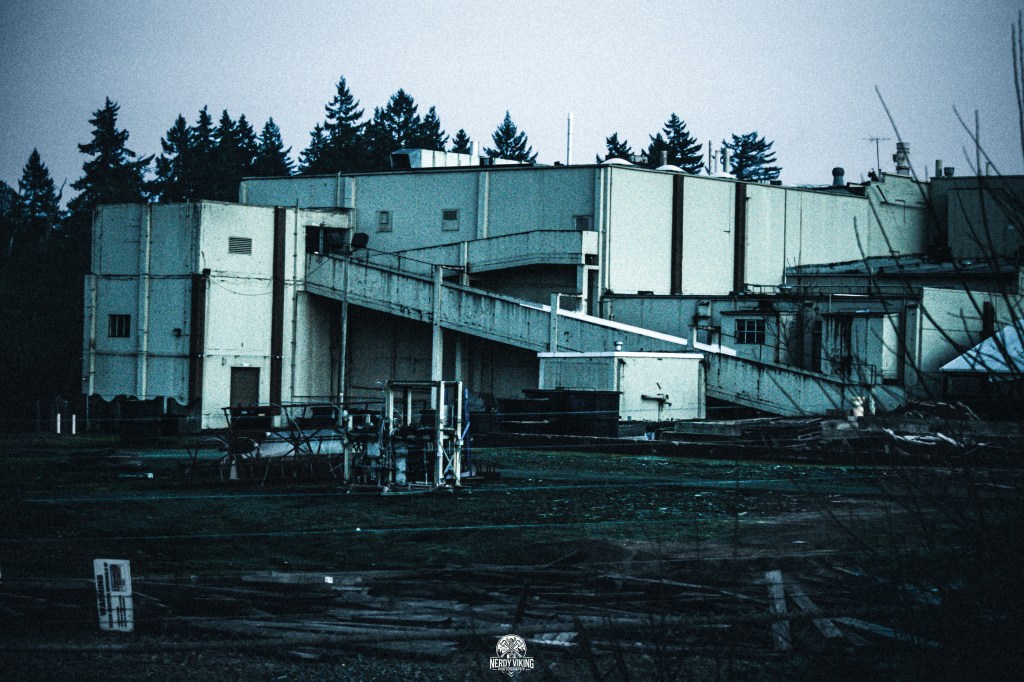
I found this place squatting at the edge of the Talking Water Gardens like a bad memory nobody wanted to claim. A concrete beast with no pulse, no lights, no visible reason to still be standing—yet there it was, looming in silence, surrounded by pipes, ramps, and rusted metal like the skeletal remains of some civic experiment gone wrong.
This wasn’t nature reclaiming the land. This was bureaucracy rotting in place.
The building had the look of something funded with optimism and taxpayer money sometime in the past—back when buzzwords like sustainability, innovation, and long-term solutions were tossed around by people in pressed suits who would never have to walk past this thing on a cold morning. You can almost hear the pitch meeting echoing off the concrete walls: state-of-the-art, future-proof, good for the community. And now? It just sits here. Empty. Watching.
The Talking Water Gardens were meant to be a miracle—engineering disguised as wetlands, a system that cleans waste while pretending to be peaceful. And to be fair, parts of it still work. Birds land. Water moves. Life goes on. But tucked behind the reeds and walking paths are these industrial husks, monuments to money spent without foresight or accountability. Too expensive to tear down. Too embarrassing to explain. Too quiet to ignore if you’re paying attention.
I stood there with the camera and felt that familiar civic nausea creep in—the sense that somewhere along the line, the people in charge stopped caring about outcomes and started caring about contracts. Bad local politics? Almost certainly. Overspending? You don’t build something like this by accident. This is what happens when public money gets funneled through private hands and left to decay once the ribbon-cutting photos are taken.
The place had no warning signs, no explanation plaques, no comforting narrative. Just concrete, steel, and the dull hum of a system still half-alive. Like it was waiting for someone to either resurrect it or finally put it out of its misery.
I took the shot because this is the part of town most people don’t photograph—the infrastructure behind the illusion. The machinery that keeps the city polite while quietly falling apart at the seams.
This building isn’t abandoned. It’s forgotten. And that’s worse.


 Nerdy Viking Photography
Leave a comment