There are days when the town you live in turns on you, shows you a different face, a strange feral mask that hides beneath all the cozy small-town brochures and cheerful banners hung over First Avenue. Today was one of those days. I grabbed the camera, stepped into downtown Albany, Oregon, and followed the cracked sidewalks toward the riverfront like a man looking for trouble or truth same damn thing most days.
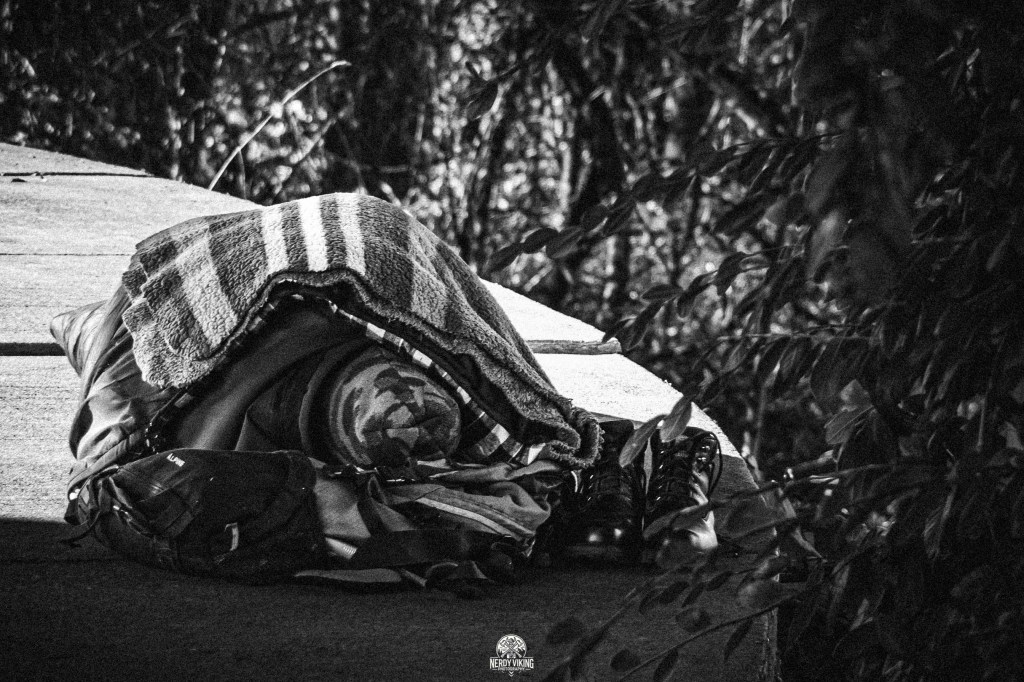
Albany isn’t Portland, thank the gods, old and new. But it still has shadows deep enough to swallow a person whole. The kind of place where you can stand in a perfectly maintained riverside park, the kind with shiny benches and nice landscaping, and then twenty feet to your left, there’s a man sleeping in a cocoon of blankets under the overpass like a forgotten ghost. A city divided by nothing more than a concrete seam… and a whole lot of willful blindness.
BRIDGES, BONES, AND BROKEN GLASS
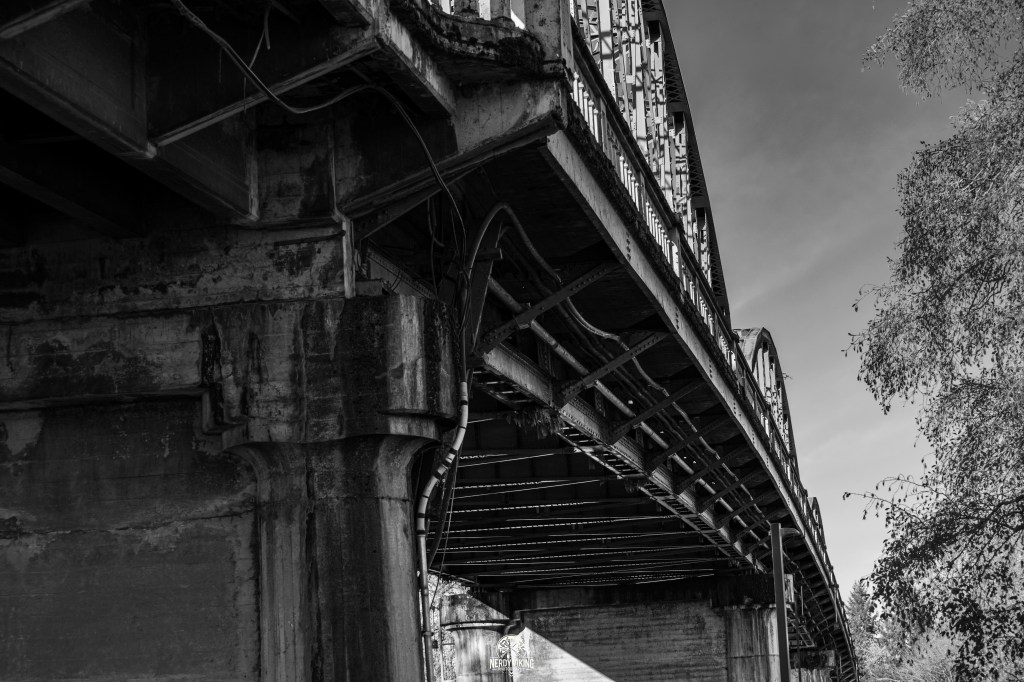
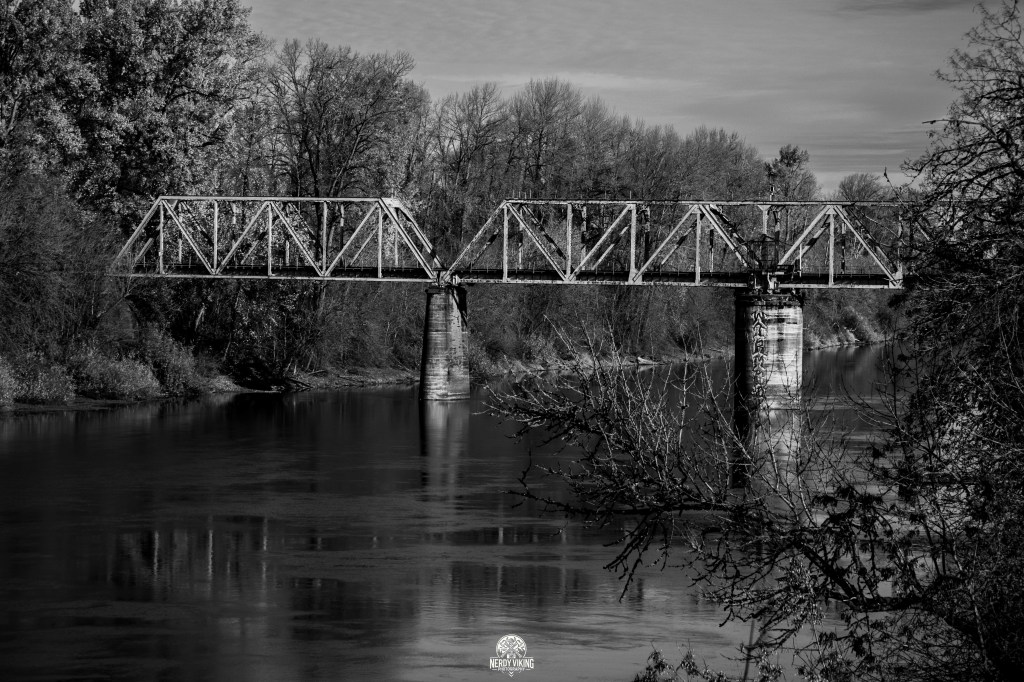
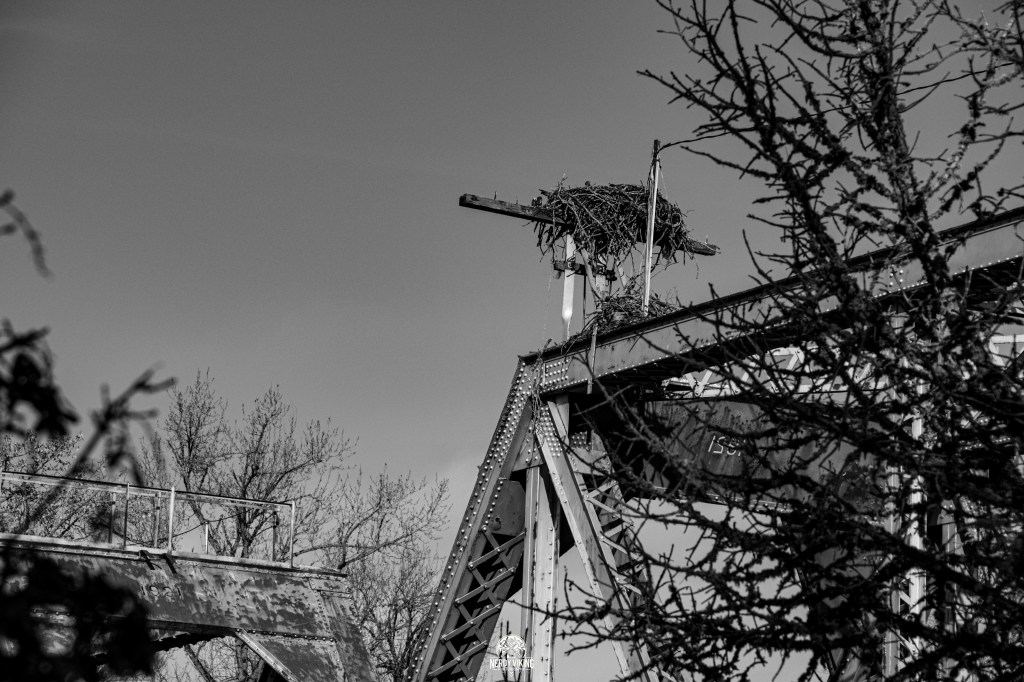
I started under the old bridge, the iron beast that’s been holding this place together for decades. Up close, it looks like something out of a forgotten chapter of American decay: rust, graffiti, bolts loosened by time and neglect. The kind of industrial skeleton that hums with stories no sane person would want to hear. The shadows there are thick, almost oily, and every sound echoes like an accusation.
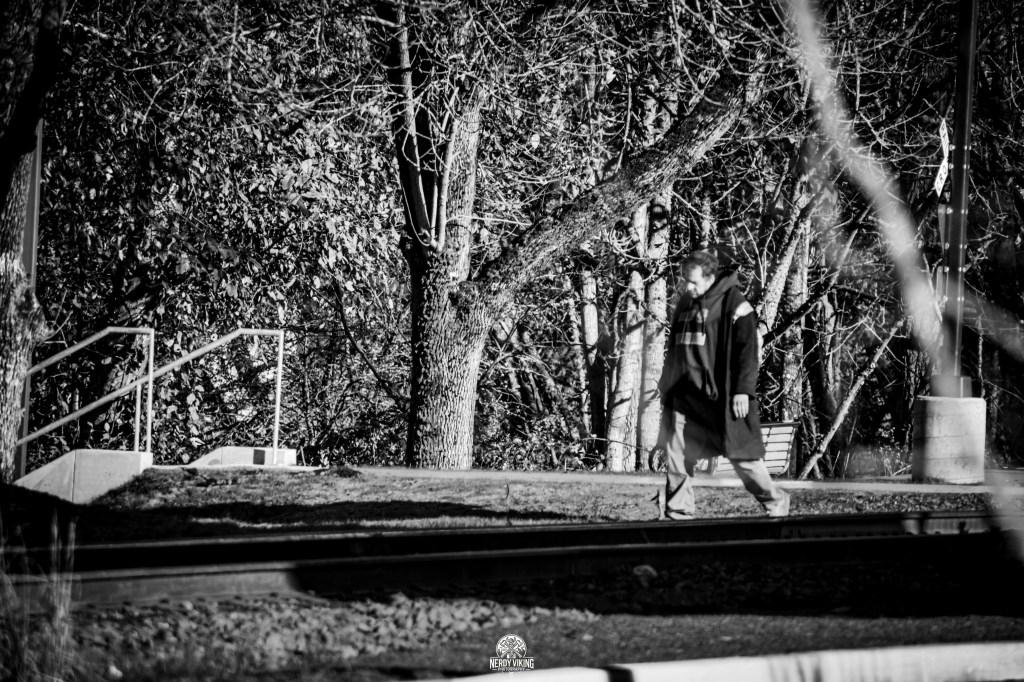
Then came the first human figure of the day. Someone bundled against the cold, walking the tracks with the weary slump of someone who’s on their fiftieth mile of a never-ending journey. Not dangerous. Not dramatic. Just tired in that deep, existential way the world likes to ignore.
THE CAT THAT WATCHES EVERYTHING
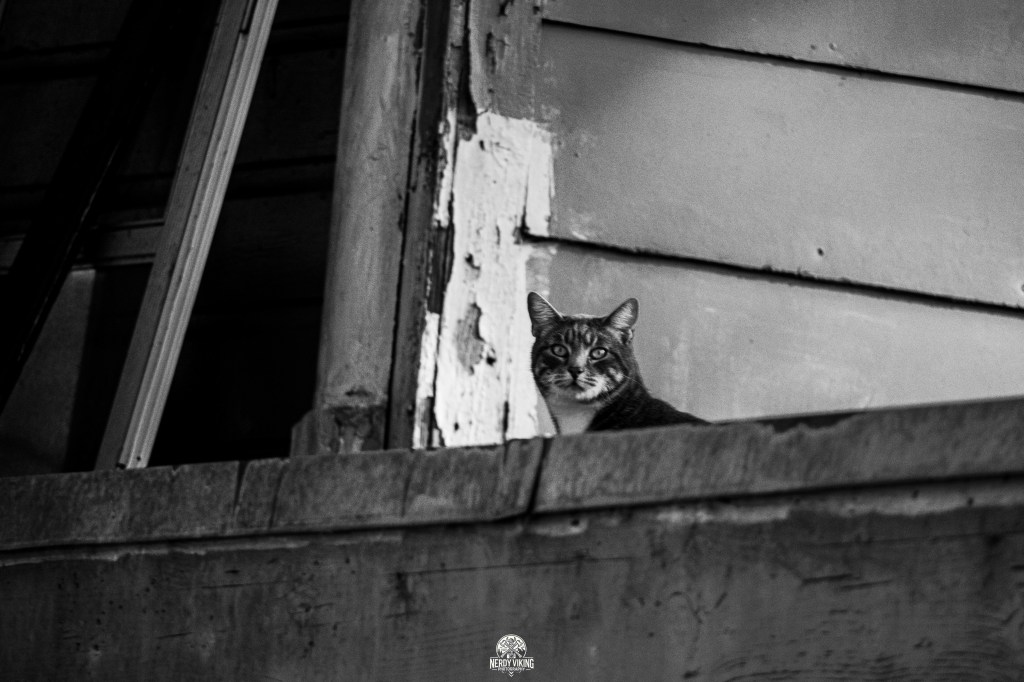
There’s always a witness in these back-alley odysseys. Today it was a cat perched in the busted-out window of a derelict building, eyes sharp, calm, judging me like I was just another trespasser in its kingdom of peeling paint and rotted wood. A little king of the forgotten places. Every town has one.
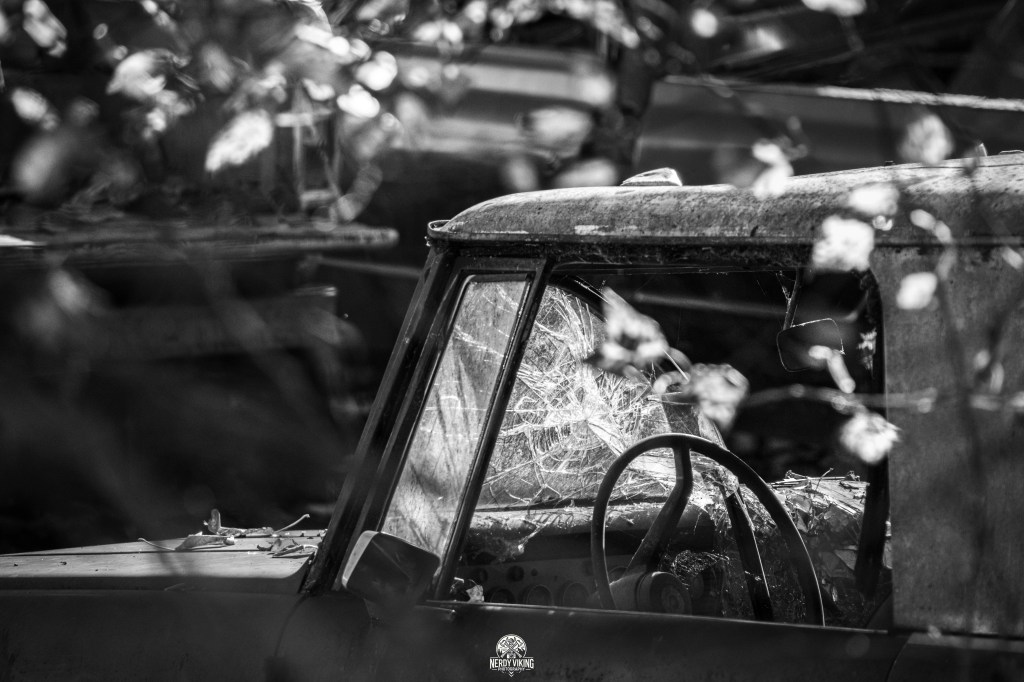
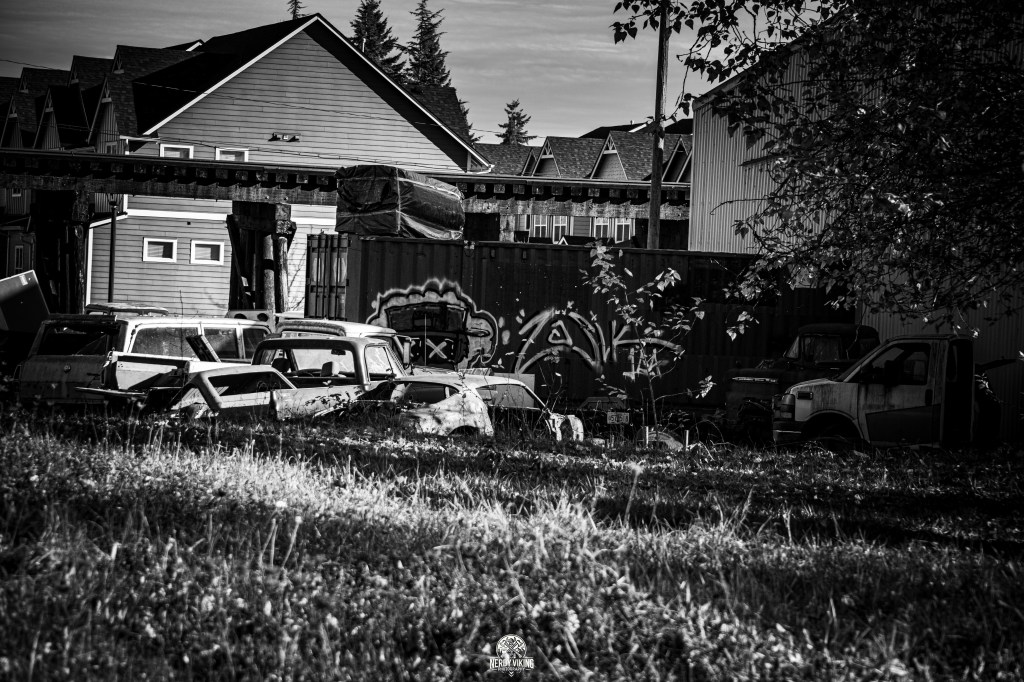
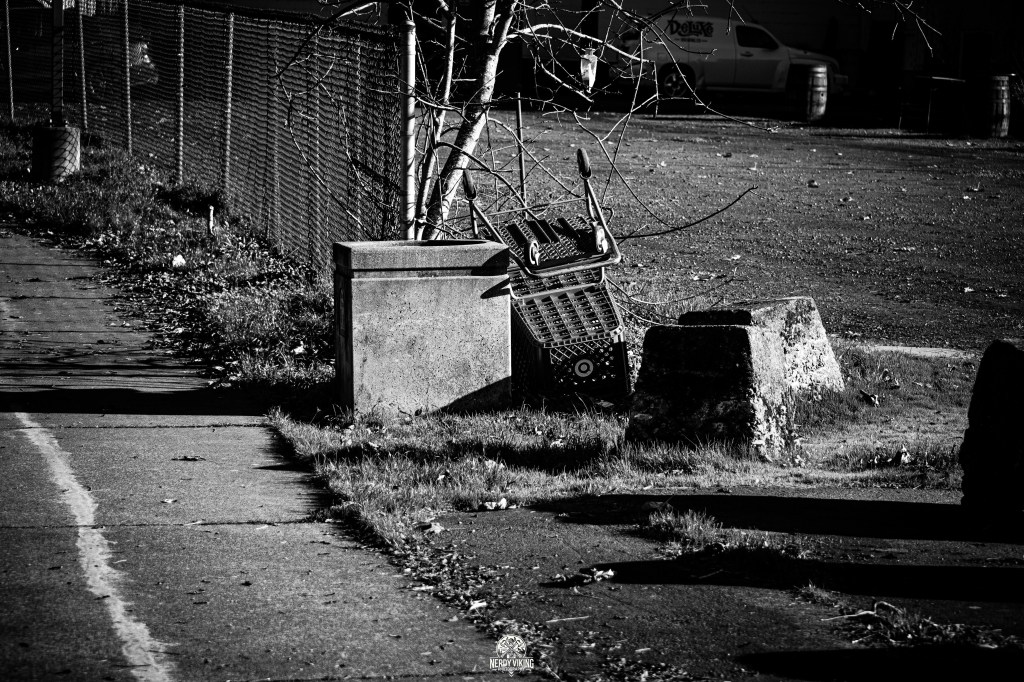
And just when I thought the scene couldn’t get any more cinematic, I stumbled onto an old wreck of a car half-consumed by the bushes, windshield shattered, steering wheel still intact, spiders living where humans once sat. A time capsule wrapped in dust and silence.



THE REALITY NO BROCHURE MENTIONS
Then came the gut punch.
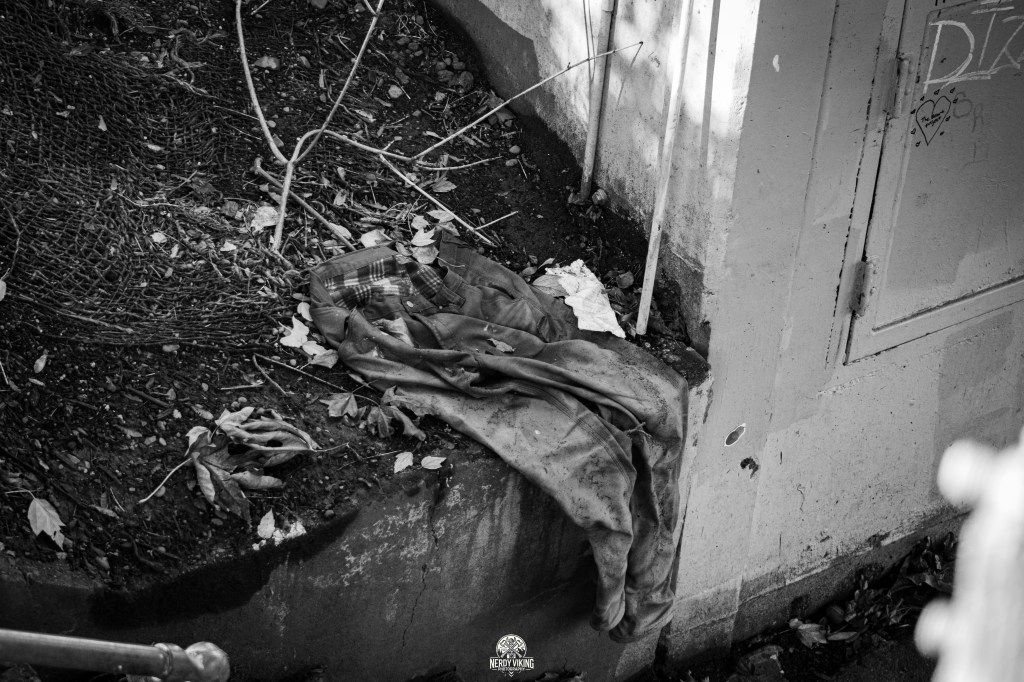
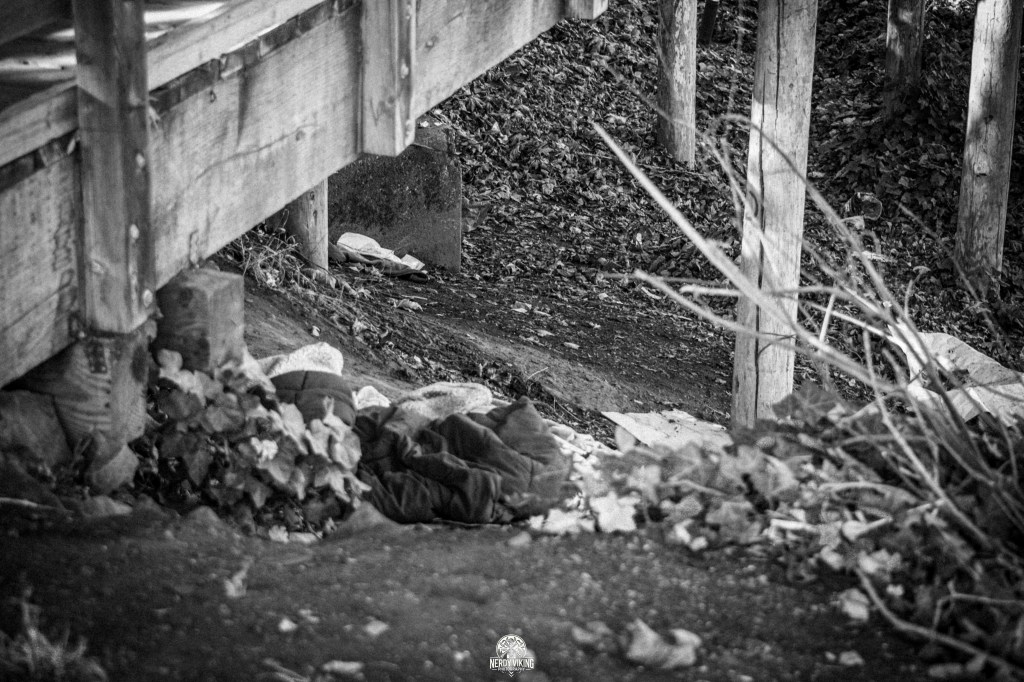
On a round slab of concrete near the shadows of the bridge, someone had built their home, such as it was. A sleeping bag. A backpack. A pair of boots, neatly placed. No sign of the person, just the suggestion of survival. A life packed into a seven-foot circle, tucked away from the world that pretends not to see it.
A few steps away: a “CLOSED TO PUBLIC USE” sign that had been graffitied to hell. Not vandalized, annotated. Commented on. A public declaration that the rules don’t apply, or maybe that the rules have already failed.
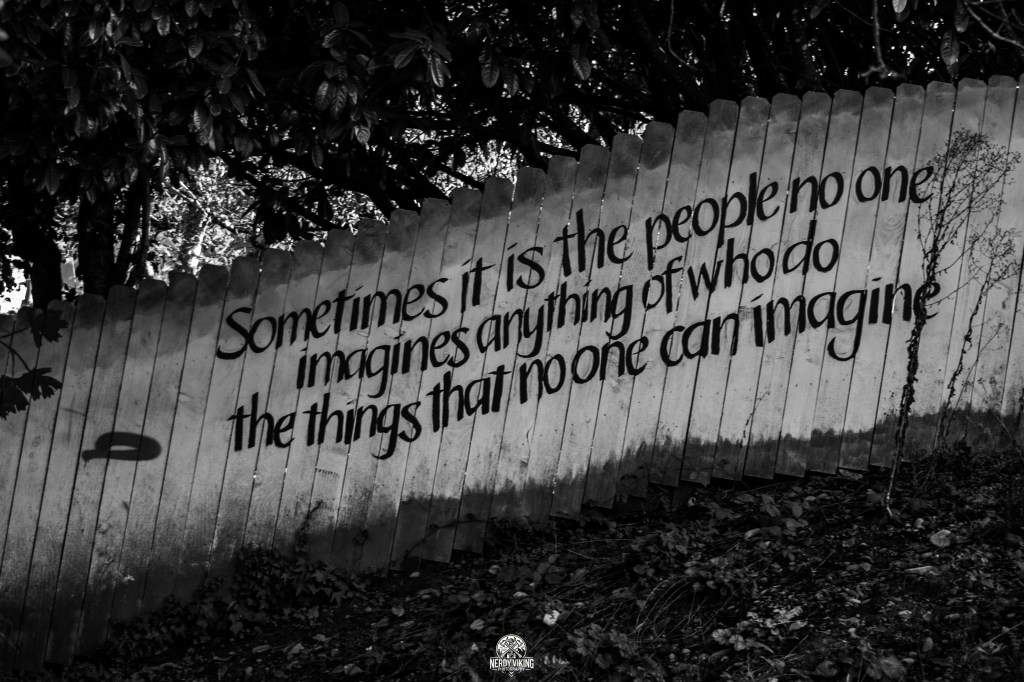
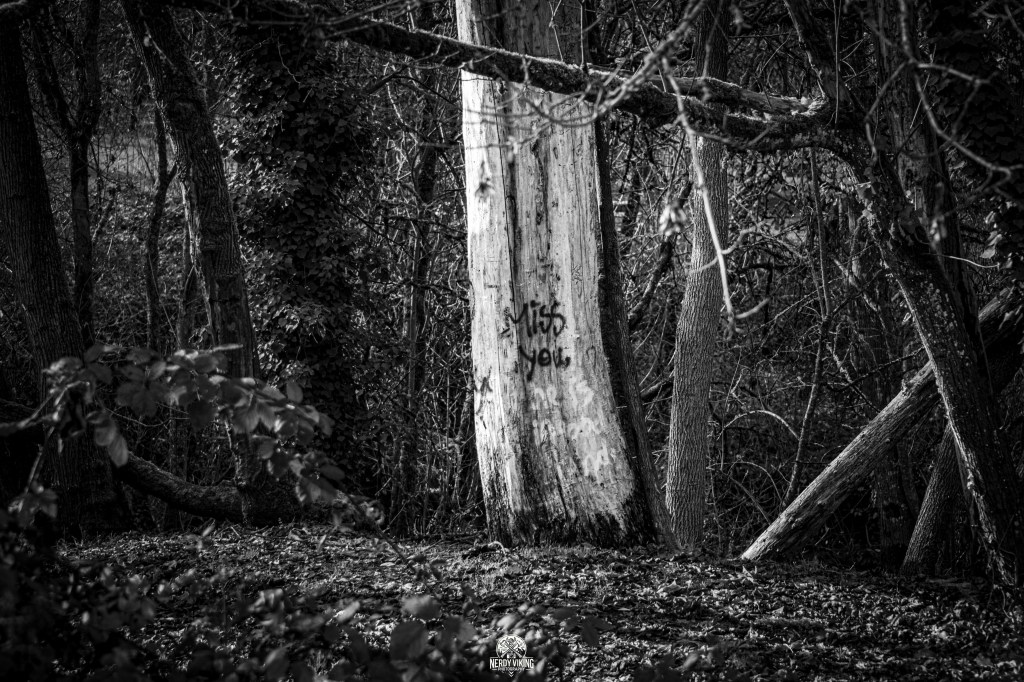
Everywhere I turned, there were messages etched in concrete, scratched into metal, sprayed onto tree trunks. “Miss you.” “777.” Half-finished prayers. Anger. Loss. Humanity leaking out between the cracks of a town trying very hard to look normal.
This is what Gonzo photography feels like:
You don’t curate the world.
The world grabs you by the jacket and drags you through its own grim circus.
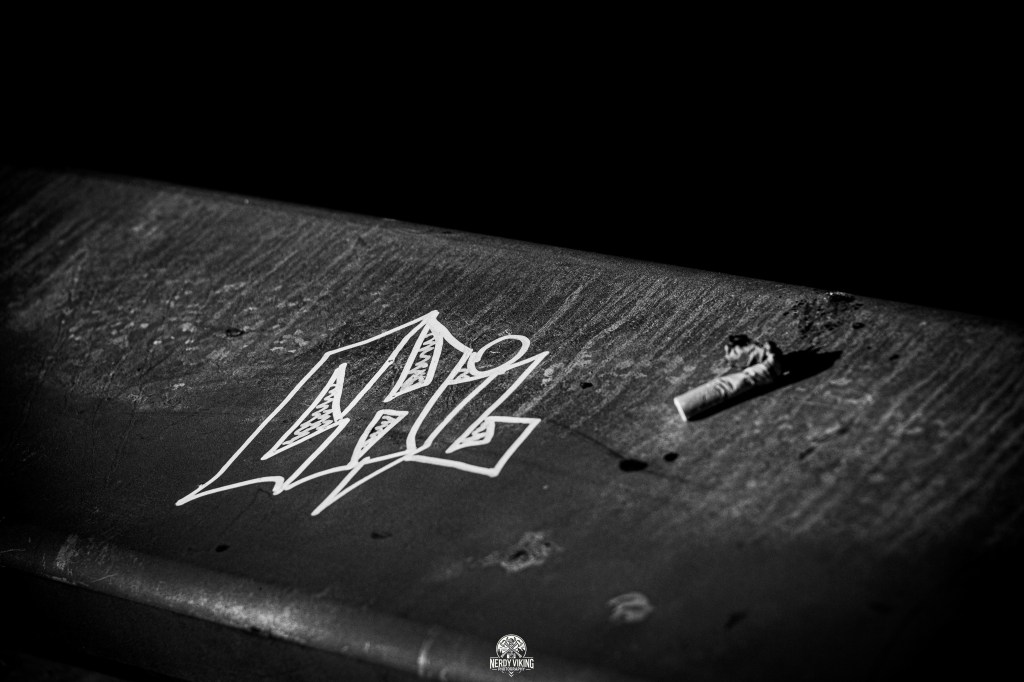
One minute you’re admiring the late-autumn sunlight over the Willamette, and the next you’re staring at a cigarette butt on a rail with some cryptic tag carved beside it like a confession. You start to wonder how many stories are orbiting this place, how many people slip through the cracks every day while the rest of us are busy sipping lattes and worrying about parking.
Albany isn’t dying. It isn’t thriving either.
It’s breathing, with a kind of stubborn grit that only mill towns and river towns seem to understand.
And walking through it today, camera in hand, felt like pulling back a curtain on the parts of home we usually only glimpse from the corner of an eye.
THE FINAL SHOT
By the time I left the waterfront, the sun was low, the wind sharper, and the town quieter, like it had exhaled after showing me a little too much. I walked back to my car with my memory card full and my head buzzing. Not with fear. Not with judgment. But with a kind of grounded honesty.
Street photography isn’t about danger or glamour.
It’s about witnessing.
Today, Albany let me witness the light and the dark that live shoulder-to-shoulder.
And I’ll tell you this:
If you ever want to understand a town—
a real town—
don’t go where the brochures tell you.
Go where the shadows fall.
Go where the graffiti tells the truth no one else will say out loud.
That’s where the story is.
And today, Albany—my messy, stubborn, strange hometown—gave me one hell of a chapter.


 Nerdy Viking Photography
Leave a comment