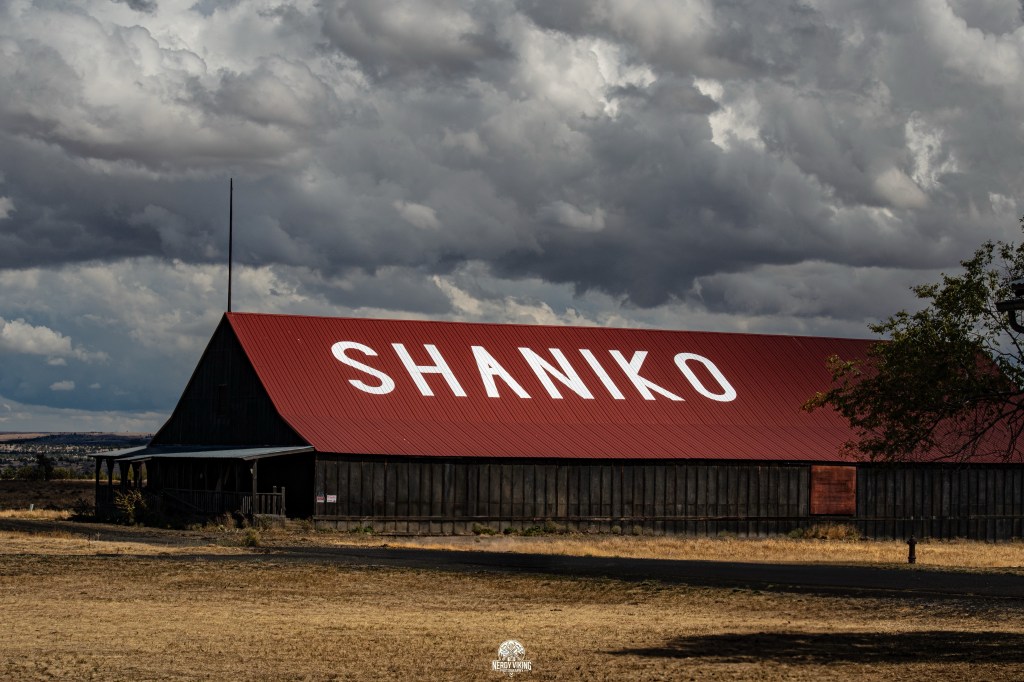
You don’t stumble into Shaniko by accident. The road coils you tighter and tighter into the high desert until the air itself starts to taste like rust and dust. Then suddenly, there it is. A ghost town frozen in time, sitting under the sun like a forgotten prop from a Western that never got filmed.
The first thing you notice is the silence. Not the suffocating, oppressive silence of Antelope, no, Shaniko’s is different. It hums, like an old jukebox left on without a record, buzzing faintly with the memory of songs. The town is empty, but not hostile. It welcomes you in the way an old saloon door creaks open, curious to see who’s wandered through.
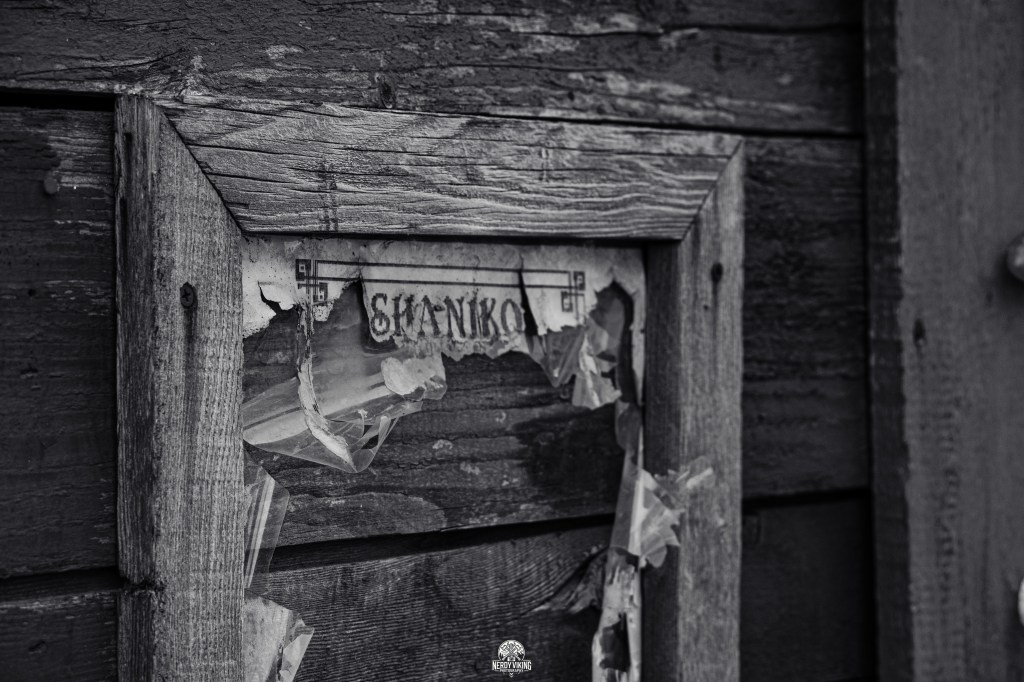
Wooden buildings slump in the heat, paint cracked and peeling, but still standing proud like veterans of a war long forgotten. The old hotel looms over the main drag, its windows dark and watchful, while barns and storefronts line the street like actors waiting for their cue. If you close your eyes, you can almost hear the rattle of spurs on the boardwalks, the shuffle of boots in dust, the gunshot arguments of men who didn’t plan to live long anyway.
We wandered through it with cameras cocked, like gunslingers looking for a duel with history. Every corner begged for a photo: rusted wagons, old water towers, relics of a time when this place mattered. Shaniko was once the “Wool Capital of the West”, trains loaded here, fortunes made and lost, lives built from sheep’s backs. But all that’s gone now. The trains left, the wool dried up, and the people bled away.
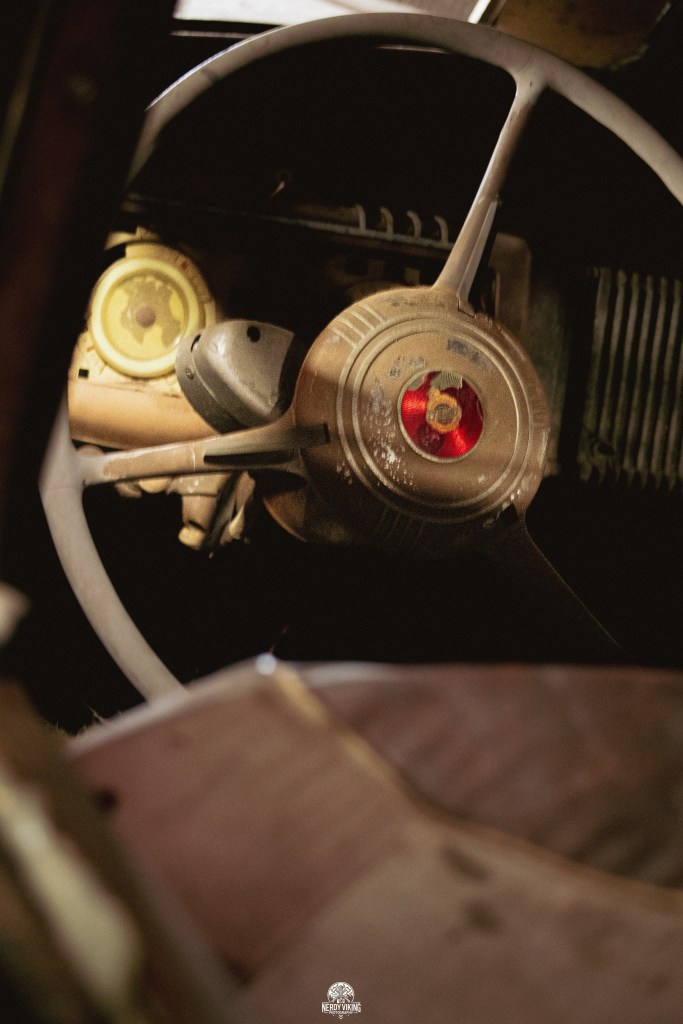


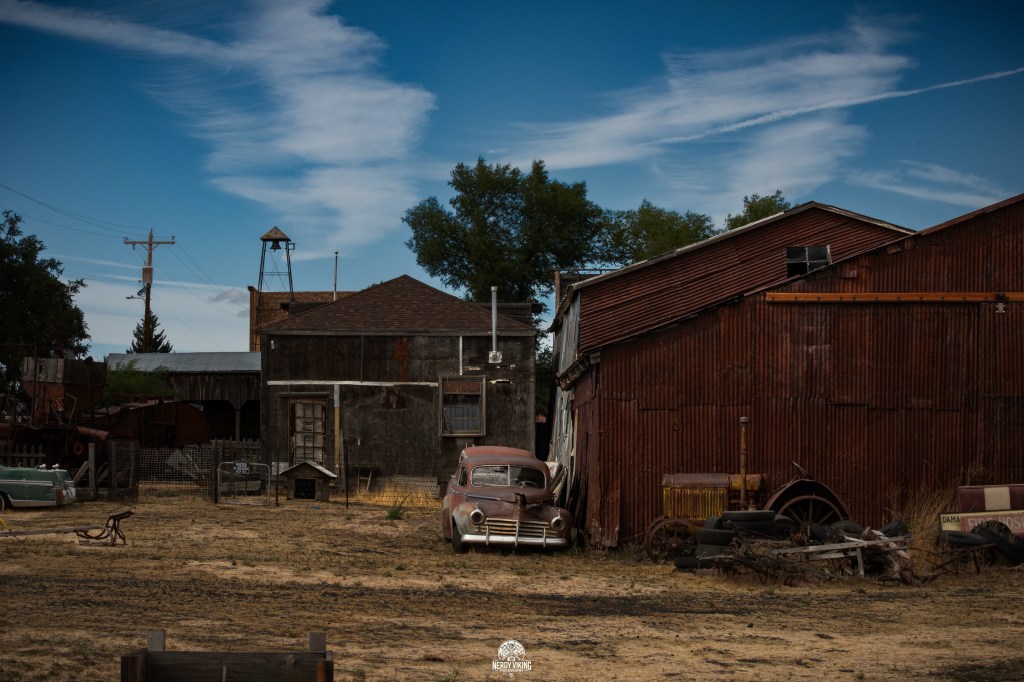

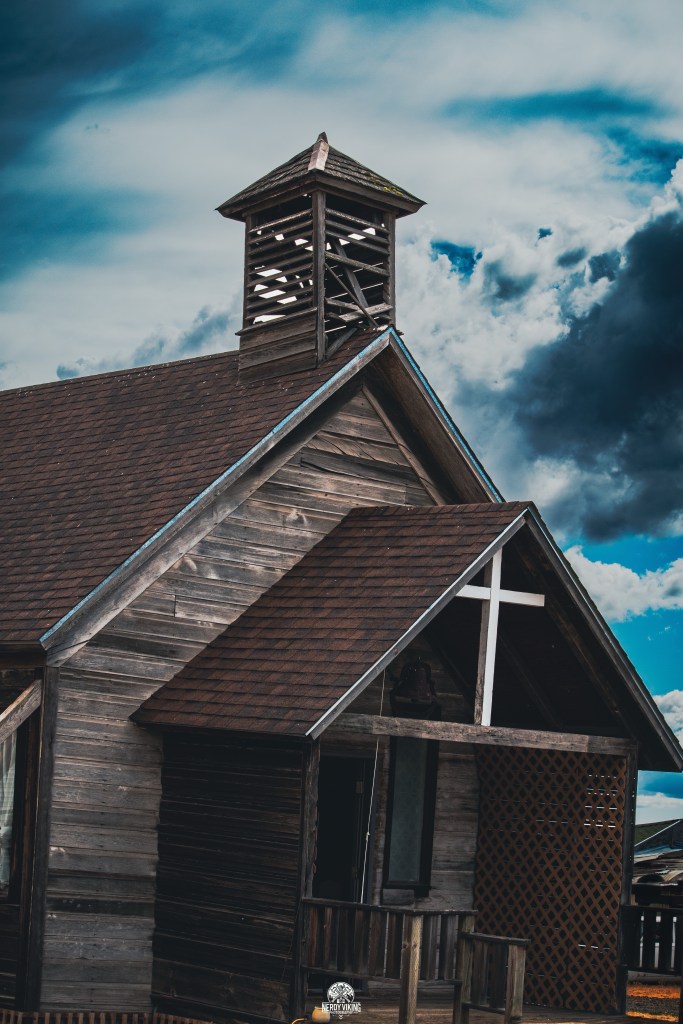

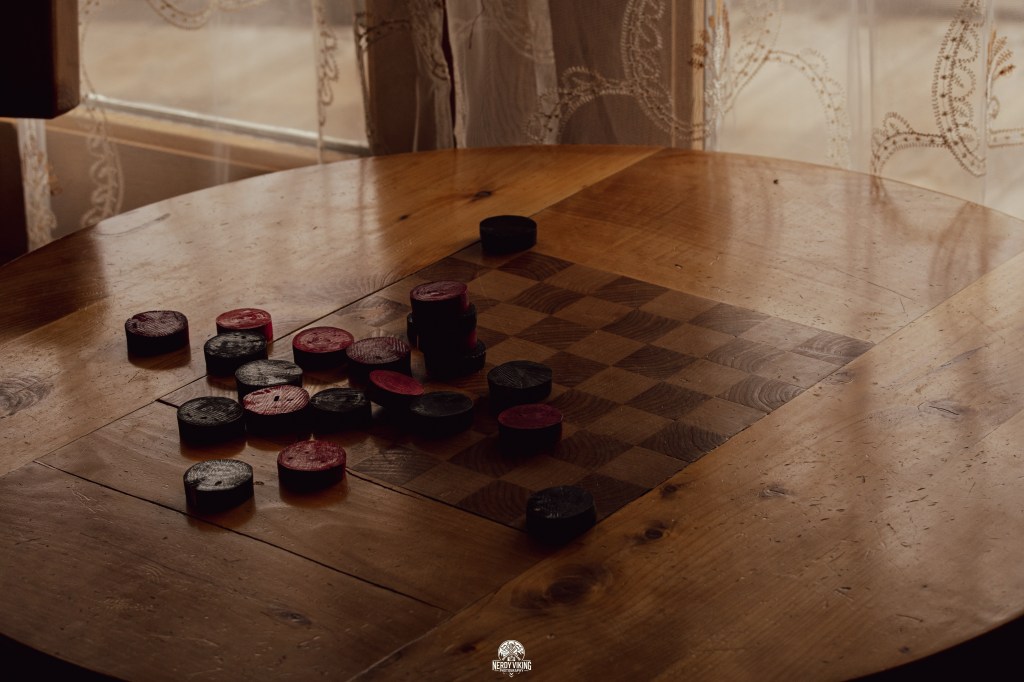


And yet, Shaniko still breathes. Unlike Antelope, where the silence felt predatory, Shaniko’s ghosts were playful. Mischievous, even. The town feels like it knows what it is, a relic, a curiosity, a piece of the past being slowly chewed up by the desert sun. It doesn’t resent you for being there. It poses for your photos, tips its hat, and lets you soak up the strange joy of a town that refuses to completely die.
As we walked the empty streets, I didn’t feel dread, I felt exhilaration. Like being backstage in history’s theater. Shaniko wasn’t haunted by malice, it was haunted by memory. And that’s a better kind of ghost.
We lingered longer than we planned, drifting between buildings, capturing every sunlit angle of decay. The old West was still here, just quieter, stripped of its whiskey and gunpowder. All that remained was the architecture, the silence, and the lingering sense that people once fought to carve lives out of this high desert.
By the time we left, the town had burned itself into my brain, a ghost town that didn’t want you to run, but to stay, to listen, to remember.
Shaniko is proof that not all ghosts are dangerous. Some just want to be seen.


 Nerdy Viking Photography
Leave a comment