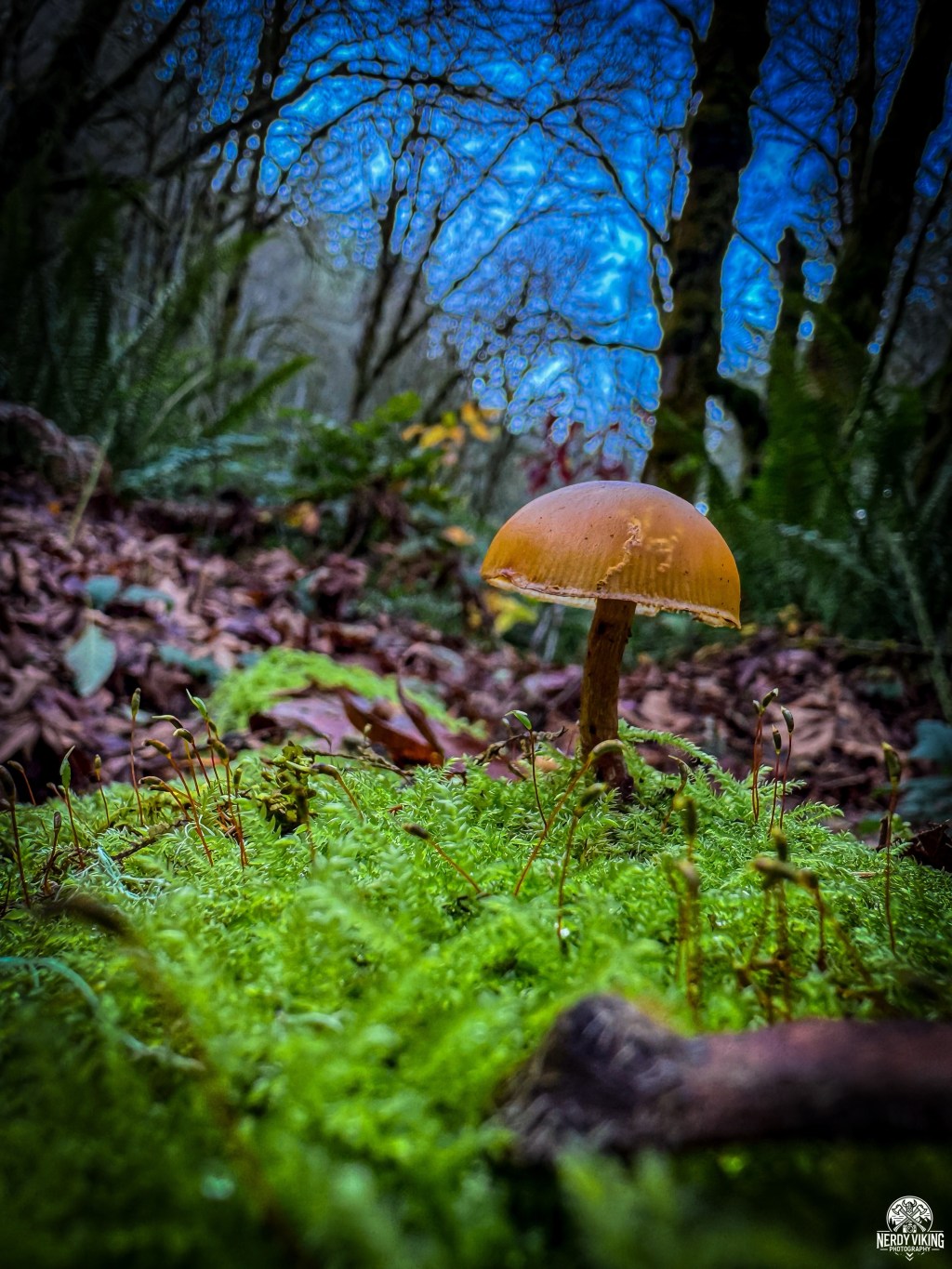
Camera info:
Nikon D3100
55.0-300.0 mm f/4.5-5.6
270mm (405mm), f/5.6, 1/80s, ISO 800
Figure I’d share this little bit of info. Because I had no idea about these mushrooms.
Galerina marginata, commonly known as the funeral bell, deadly skullcap, autumn skullcapor deadly galerina, is a small, wood-rotting mushroom that is highly toxic. Below are some key facts about this species:
Identification
1. Appearance:
• Cap: Convex, brownish to tan in color, and becomes sticky when wet. The cap diameter ranges from 1 to 5 cm.
• Gills: Attached to the stem, pale when young, turning rusty brown as spores mature.
• Stem: Thin, yellowish to light brown, with remnants of a delicate ring (partial veil) which may fade with age.
• Spores: Rusty brown, ellipsoid, and finely warty under a microscope.
2. Habitat:
• Found worldwide in temperate regions, often growing on decaying wood, moss, or forest debris.
• Typically associated with coniferous or mixed forests.
3. Similar species:
• Often mistaken for edible mushrooms such as the honey fungus (Armillaria spp.) or certain species of Kuehneromyces due to their similar size and habitat.
Toxicity
1. Toxin: Contains amatoxins, the same lethal compounds found in the death cap (Amanita phalloides).
2. Symptoms:
• Onset of symptoms occurs 6–12 hours after ingestion.
• Initial gastrointestinal distress: nausea, vomiting, diarrhea.
• After a temporary improvement, liver and kidney damage may occur, potentially leading to organ failure and death if untreated.
3. Lethality:
• As little as one mushroom can be fatal.
• Requires urgent medical intervention, such as activated charcoal or liver-supportive treatments like silibinin or a liver transplant.
Ecology and Role
1. Ecological role:
• Saprotrophic: decomposes wood and contributes to nutrient cycling in forest ecosystems.
2. Fruiting season:
• Typically found in late summer through fall, but can also appear in mild winter conditions in some regions.
Prevention
1. Avoiding confusion:
• Be cautious when foraging for mushrooms, especially in forests where galerina species are common.


 Nerdy Viking Photography
Leave a comment